The Magic of Pendulums
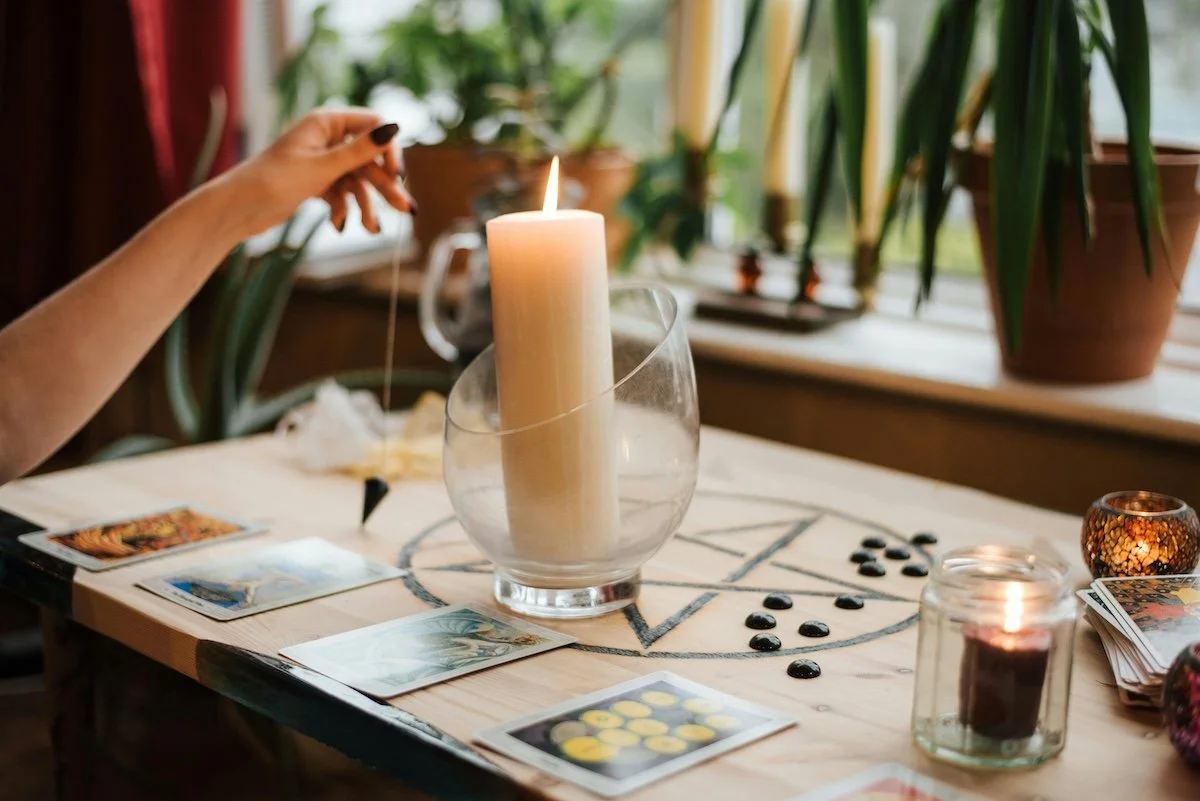
Pendulums: The Little Tool That Gives Big Answers
Pendulums are one of the simplest, most accessible tools in divination and energy work, yet they can deliver surprisingly clear answers when used with respect and practice. Whether you’re completely new to metaphysical tools or just want a refresher, here’s everything you need to know to get started.
A Deeper Look at Pendulum History
The use of suspended objects to gain knowledge stretches back to the earliest civilizations. In ancient China (as early as 2000 BCE), healers used “suspended needles” to diagnose illness and locate underground water. Egyptian priests employed similar tools in temple rituals, and Etruscan augurs in pre-Roman Italy swung weighted cords to interpret the will of the gods. By the Middle Ages, European dowsers, often called “water witches”, were using forked sticks and pendulums to find springs, minerals, and lost objects.
The French abbot Jean-Baptiste Mermet in the early 20th century elevated pendulum work to an art form, publishing detailed maps and techniques that are still taught today. During both World Wars, some military units quietly consulted dowsers to locate water, unexploded ordnance, and missing soldiers. The Vatican itself reportedly kept skilled pendulum operators on staff well into the 20th century. What began as a survival necessity (finding water in arid lands) evolved into a respected method of accessing subconscious wisdom, spirit communication, and subtle energy—a tradition that’s very much alive every time someone picks up a crystal point on a chain and asks, “What do I need to know today?”
What Exactly Is a Pendulum?
A pendulum is any weighted object suspended on a chain or cord. The weight can be a crystal point, a metal cone, a key, or even a ring tied to a piece of thread. The magic isn’t in the object itself; it’s in how your subconscious (or spirit guides, higher self, the Universe—take your pick) subtly influences the swing.
Choosing Your First Pendulum
You’ll feel drawn to one; trust that pull. Popular beginner choices:
Clear quartz: neutral and amplifying
Amethyst: intuitive and protective
Black tourmaline: grounding and cleansing
Rose quartz: heart-centered questions
Programming Your Pendulum (The Most Important Step)
Before asking about lost keys or life decisions, establish your “yes/no/maybe” language:
Hold the chain between your thumb and forefinger, elbow resting on a table or knee so the pendulum hangs freely.
Calm your mind. Take a few deep breaths.
Say (out loud or silently): “Show me my YES.” Wait for movement. Most people get back-and-forth or clockwise.
Then ask: “Show me my NO.” Usually side-to-side or counter-clockwise.
Finally: “Show me MAYBE / I DON’T KNOW / NOT READY TO ANSWER.” Often a diagonal swing or tiny jitter.
Write down what yours does; it might be unique to you.
How to Use a Pendulum: Step-by-Step
Now that it’s programmed, here’s the actual process most people follow every time they sit down with their pendulum:
Find a quiet space and ground yourself (a few deep breaths or a quick “I am open only to answers for my highest good” statement works wonders).
Hold the pendulum exactly as you did when programming it—light grip, elbow supported, letting it hang about 6–12 inches down.
If you like, state your intention out loud: “I ask for clear, honest answers from my higher self / guides / the Universe.”
Ask your yes/no question clearly and neutrally (silently or aloud). Avoid leading language—“Is this job good?” is better than “This job is perfect for me, right?”
Wait. The first tiny movement usually starts within 5–15 seconds. Let it build; don’t force it.
Observe the direction and trust it—even if you don’t like the answer.
When you’re finished, thank your pendulum (and any guides) and let it come to a complete stop before putting it away.
Pro tip: Keep a journal. Write the exact question and the answer every time. You’ll be amazed how accurate it becomes once you have a track record.
How to Ask Good Questions
Pendulums love yes/no questions. The clearer, the better.
Good: “Is this new job offer in my highest good?”
Bad: “What should I do about my career?”
You can use pendulum charts (alphabet, percentage, chakra charts) for more detailed answers, but start simple.
Why Pendulums Can Feel More Clarifying Than Open-Ended Tarot
Many people who love tarot eventually pick up a pendulum because it removes the beautiful—but sometimes overwhelming—ambiguity of card spreads. A three-card tarot reading can give you layers of nuance, symbolism, and “well, it could mean this or that,” which is perfect when you want depth. A pendulum, on the other hand, ruthlessly cuts to a single yes or no (or maybe). That directness can feel like a cool drink of water when you’re stuck in indecision: “Should I text him?” “Is this supplement actually helping me?” “Am I ready to launch this project?” Boom—answer. No interpreting court cards at 2 a.m. For daily clarity without the mental gymnastics, which is why so many tarot readers keep a pendulum right next to their deck—best of both worlds.
Cleansing & Caring for Your Pendulum
Moonlight (especially full moon)
Smoke from sage, palo santo, or juniper
Sound (singing bowl, bell, or just clap near it)
Bury in Himalayan salt for a few hours
Common Beginner Mistakes
Asking the same question 17 times because you don’t like the first answer (the pendulum gets annoyed and stops moving).
Holding it too tightly; relax your arm.
• Forgetting to say thank you when you’re done.